No Is a Complete Sentence: Melissa Gorga's Unapologetic Guide to Protecting Your Time and Power

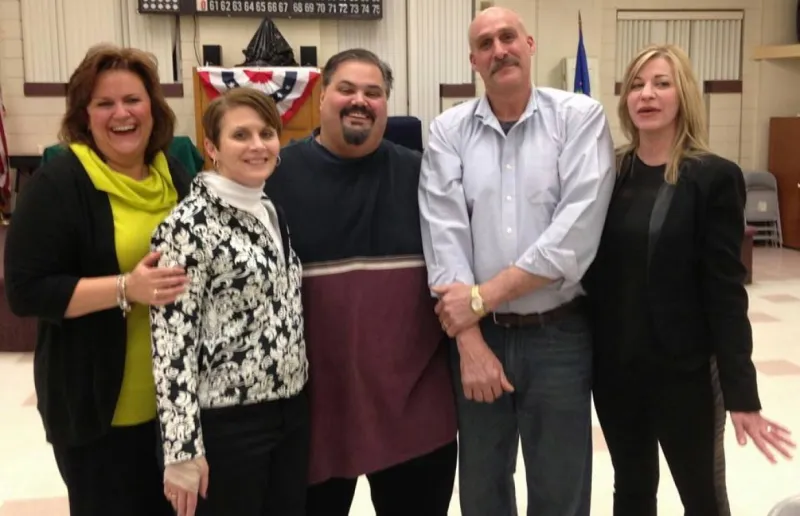
Photo: micadew from US, CC BY-SA 2.0, via Wikimedia Commons
There's a version of success that looks great on camera but quietly drains you dry. You're always available, always agreeable, always saying yes — to the extra meeting, the last-minute favor, the project that doesn't pay you what you're worth. For a long time, that was the unspoken deal for women who wanted to be seen as serious, likable, and ambitious all at once.
Melissa Gorga knows that version of exhaustion intimately. Balancing life on The Real Housewives of New Jersey, building a fashion brand, raising three kids, and staying present in her marriage didn't happen by accident — and it definitely didn't happen by saying yes to everything. At some point, she had to get really honest about what deserved her time and what didn't.
The result? A sharper, more intentional version of herself. And a lesson every ambitious woman needs to hear: No is not the end of a relationship. It's often the beginning of a better one.
Why Women Are Conditioned to Say Yes (And Why It Costs Us)
Let's be real — there's enormous social pressure on women to be accommodating. Especially in entertainment and business, where your reputation feels like it's always one declined invite away from a reputation disaster. Women are told, explicitly or not, that being difficult is the fastest way to get written off.
But here's the flip side nobody talks about: saying yes to everything signals that your time has no value. When you're always available, people stop respecting your schedule. When you never push back, people stop considering whether their ask is even reasonable.
Melissa has talked openly about the way her world — TV production schedules, brand partnerships, family obligations — could swallow her whole if she let it. The chaos isn't unique to reality TV. It's the same pressure a working mom in Chicago or a small business owner in Atlanta feels every single week. The demands are relentless, and the only person who can filter them is you.
The Mindset Shift: From People-Pleaser to Priority-Keeper
The first step isn't learning a script for how to decline things. It's changing how you think about your own time.
Melissa's approach has always been rooted in clarity about what actually matters. Family, creative work, physical health, and meaningful friendships sit at the top. Everything else gets evaluated against those priorities — not against someone else's urgency or expectations.
When you're clear on your non-negotiables, saying no stops feeling like rejection and starts feeling like alignment. You're not turning someone down. You're protecting something more important.
Try this: Write down the five things that, if you neglected them for a month, would make your life noticeably worse. Those are your priorities. Every ask you receive either supports those things or competes with them. That's your filter.
How to Say No Without Burning Bridges
Okay, let's get practical. Because saying no gracefully is genuinely a skill — one that takes practice and a little finesse.
Keep it short. You don't owe anyone a three-paragraph explanation. A simple "I'm not able to take that on right now" is complete. Lengthy justifications actually invite negotiation. The more you explain, the more opening you give someone to problem-solve around your no.
Be warm, not apologetic. There's a difference between "I'm so sorry, I just have so much going on, I feel terrible" and "I appreciate you thinking of me — this one's not the right fit for me right now." One communicates guilt. The other communicates confidence. Guess which one people respect more.
Offer something small when it makes sense. If someone asks for your time and you genuinely can't give it, but you care about the relationship, a brief redirect goes a long way. "I can't do a call this week, but I'd love to connect in a few weeks when things settle" keeps the door open without overcommitting.
Don't over-apologize. This one is huge for women especially. Saying sorry before, during, and after a no turns a confident boundary into a performance of guilt. Say it once if it feels right, then move on.
The Reality TV Test: Boundaries Under a Microscope
If you've ever watched Melissa navigate the dynamics of RHONJ, you've seen boundary-setting play out in real time — sometimes messily, always publicly. Reality TV is basically a masterclass in what happens when personal limits get tested in front of millions of viewers.
What Melissa has demonstrated, season after season, is that holding your ground doesn't require being cold or combative. You can be warm, funny, and deeply loyal while also being completely clear about what you won't tolerate. Those things aren't opposites.
The same principle applies off-screen. In business meetings, in friendships, in family dynamics — you can be the most generous, supportive person in the room and still have lines you don't cross. In fact, the people who respect you most will appreciate knowing where those lines are.
Protecting Your Energy Without Going Dark
One of the biggest fears women have about setting limits is that they'll come across as cold or inaccessible. That people will stop calling, stop including them, stop seeing them as a team player.
Here's the truth: the right people will respect it. The ones who push back hard when you say no are often the ones who were benefiting most from your unlimited availability — not necessarily the people who had your best interests at heart.
Melissa has always been someone who shows up fully when she's in — for her family, her fans, her business partners. That full presence is only possible because she's deliberate about where and when she gives it. You can't pour from an empty glass, and you definitely can't build something lasting when you're running on fumes.
Your No Is Your Brand
Every yes and every no you give is a statement about what you value. Over time, those choices shape how the world sees you — and more importantly, how you see yourself.
Being the person who says yes to everything might feel safe in the short term. But the women who build lasting influence — in business, in their communities, in their families — are the ones who are intentional about their energy. They show up powerfully because they've protected their power.
Melissa didn't build her brand by being everything to everyone. She built it by being very specifically, unapologetically herself. And that took knowing, clearly and confidently, what she was and wasn't willing to do.
Your no isn't a weakness. It's a signature. Own it.